
Medical diagnostic devices are used to assess health status.
They are helpful in detecting abnormalities in the functioning of organs and body systems.
In this post, we will focus on cardiology diagnostic devices, which we have been dealing with since 2013.
What are the benefits of devices for diagnosing cardiovascular diseases?
Technological advancements play a key role in medicine today. Modern diagnostic devices such as blood pressure monitors, ECG machines, ECG Holters, blood pressure Holters, pulse oximeters, and vital signs monitors significantly improve the quality of healthcare.
1. Blood Pressure Monitors: Blood Pressure Monitoring
Blood pressure monitors are used both at home and in medical facilities. Blood pressure monitors are a fundamental tool for monitoring blood pressure. Regular measurements allow for early detection of hypertension, a major risk factor for cardiovascular disease. This allows users to take appropriate steps to prevent serious health complications, primarily through lifestyle changes.
The first attempts to measure blood pressure date back to the 18th century, when Stephen Hales conducted experiments on animals. However, it wasn't until 1896 that Italian physician Scipione Riva-Rocci invented the first practical mercury sphygmomanometer. His design was simple yet effective: a cuff that could be inflated, a mercury manometer, and a stethoscope to listen for pulse sounds.
In 1905, Russian physician Nikolai Korotkov introduced the auscultation method, which is still used today. It involves listening for characteristic sounds when the pressure in the cuff is released. This method allows for more accurate determination of both systolic and diastolic blood pressure.
Regular blood pressure monitoring is crucial in the prevention and treatment of many diseases. Hypertension is a major risk factor for heart disease, stroke, and kidney failure. Early detection and appropriate treatment of hypertension can significantly reduce the risk of complications. Blood pressure monitors are indispensable in monitoring patients with previously diagnosed hypertension, allowing doctors to adjust treatment on an ongoing basis.
Currently, there are many types of blood pressure monitors.
Are mercury sphygmomanometers (they are very accurate, but due to the mercury content they are used less and less for ecological reasons).
Aneroid blood pressure monitors (instead of mercury they use a spring and clockwork to measure pressure).
Electronic blood pressure monitors (automatic devices, available in wrist and arm versions; they are comfortable and often offer additional functions, such as measurement memory or the ability to connect to mobile applications).

Upper arm blood pressure monitor
2. ECG Devices: Diagnosis of Heart Diseases
ECG machines, also known as electrocardiographs, are used to diagnose arrhythmias, heart attacks, and other circulatory system disorders. They enable accurate assessment of the heart's electrical activity. This allows doctors to quickly and effectively assess a patient's heart condition and initiate appropriate treatment.
An electrocardiograph works by recording electrical impulses generated by the heart via electrodes placed on the patient's skin. These impulses are then converted into a graph that shows the heart's cyclical electrical activity, called the cardiac cycle. Each phase of this cycle corresponds to a specific physiological event, such as the contraction of the heart's ventricles.
As technology advances, ECG monitors are becoming increasingly advanced. The development of artificial intelligence algorithms allows for the automatic interpretation of ECG results.

Handheld ECG machine
3. Holter ECG: 24/7 heart monitoring
Holter ECG monitors allow for continuous 24-hour monitoring of heart activity. Patients wearing the device can lead normal lives while the device collects data, which is then analyzed by doctors.
A Holter ECG monitor works similarly to a standard ECG monitor. Additionally, a Holter ECG monitor can be worn by the patient for extended periods of time, typically during normal activities, including sleep.
To use the Holter, electrodes are placed on the chest. The electrodes are connected to a Holter, which can be worn on the waist or arm. This device records the heart's electrical activity in real time throughout the monitoring period.
A Holter ECG allows for continuous monitoring of heart activity. Secondly, it is a non-invasive diagnostic method that does not require hospitalization. Holter monitoring can be used in a variety of settings, including daily activities and sleep, allowing doctors to gain a more complete picture of a patient's heart health.
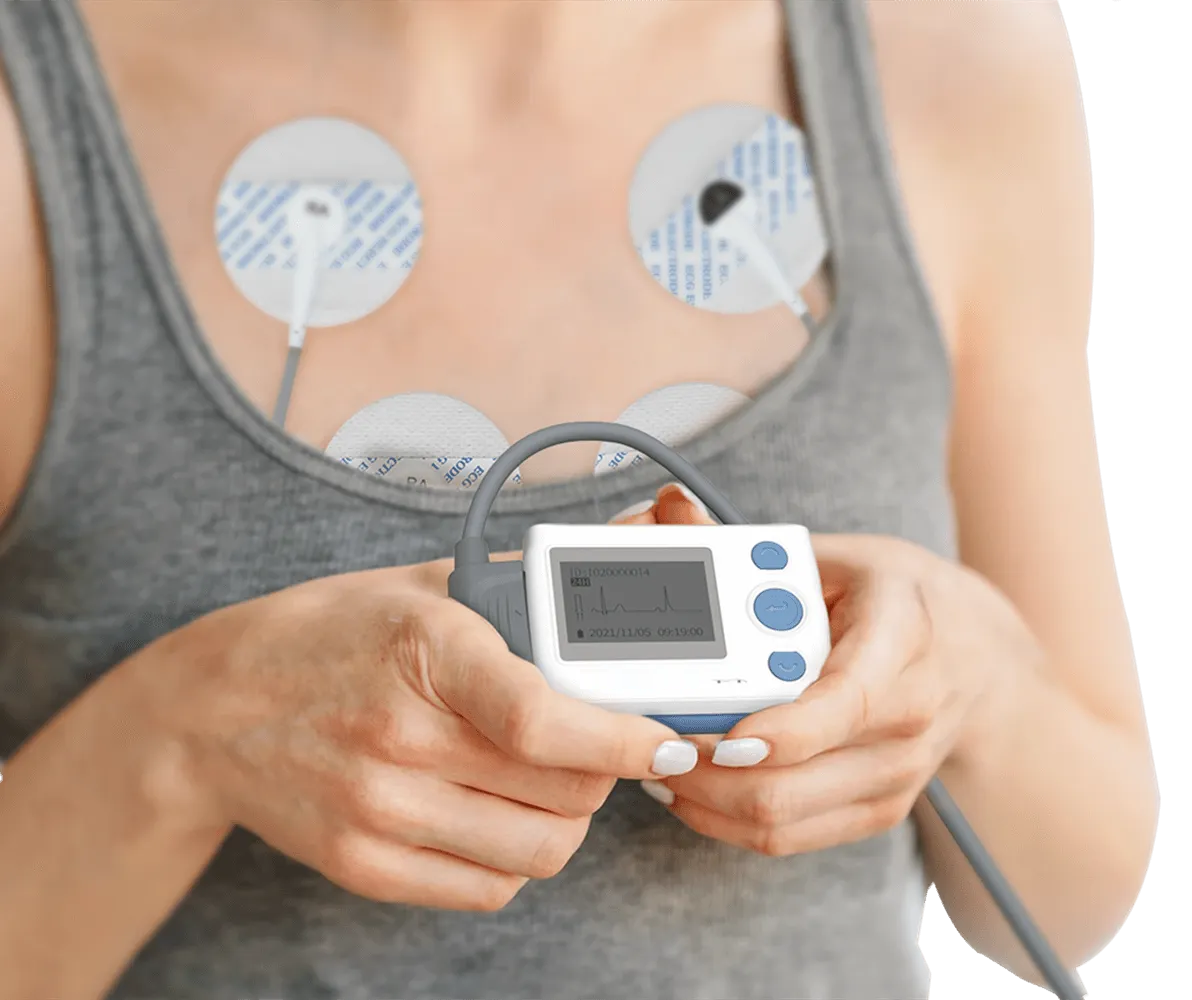
12-channel Holter ECG
4. Blood Pressure Holters: 24/7 Blood Pressure Monitoring
Holter blood pressure monitors are attached to the patient for a 24-hour period, typically measuring blood pressure every 15 to 30 minutes during the day and every 30 to 60 minutes at night. Their purpose is to provide an accurate picture of the patient's blood pressure during everyday life.
Blood pressure holters consist of an arm cuff connected to a small monitoring device attached to a belt or worn on a belt. The cuff is inflated to measure blood pressure, and the data is recorded by the device 24 hours a day. During this time, patients lead normal lives, allowing blood pressure to be recorded under various conditions, including sleep, rest, and physical activity.
Blood pressure monitors are used to diagnose many cardiovascular conditions, such as hypertension, arrhythmias, cerebrovascular disease, and ischemic syndromes. Monitoring blood pressure 24/7 can reveal fluctuations that may be difficult to detect during routine office measurements.
Blood pressure monitors also offer benefits in monitoring the effectiveness of treatment for hypertension and other heart conditions, allowing doctors to adjust medication doses or change treatment regimens based on a patient's actual blood pressure measurements.
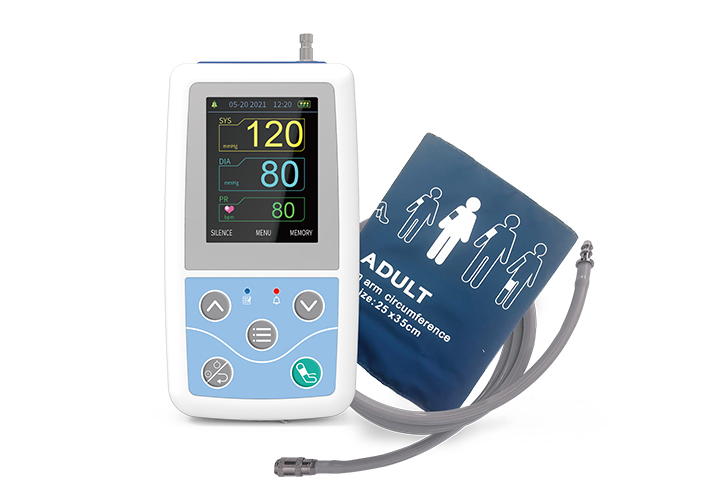
Blood pressure Holter
5. Pulse Oximeters: Monitoring Oxygen Saturation
Pulse oximeters measure blood oxygen saturation levels and heart rate. These devices are widely used and are among the most reliable tools in health monitoring, particularly in the context of the respiratory system.
Pulse oximeters use a technology called spectrophotometry, which measures the amount of light passing through body tissue. This light comes from an LED diode at one end of the device, while a detector at the other end picks up the light as it passes through the patient's skin. This method allows the pulse oximeter to determine how well oxygen is being transferred through the circulatory system to the tissues. The result is expressed as a percentage of oxygen saturation in the blood (SpO2).
Pulse oximeters are incredibly versatile and find applications in many medical fields. They enable patient monitoring in hospitals. In hospitals, pulse oximeters are standard equipment, enabling continuous assessment of patients during procedures, post-surgery, or in the case of medical conditions such as respiratory failure. Pulse oximeters are also useful for home diagnostics.

Pulse oximeter
6. Vital Sign Monitors: Comprehensive Health Assessment
Vital signs monitors measure parameters such as heart rate, blood pressure, oxygen saturation, and respiratory rate. They enable continuous monitoring of a patient's condition. This allows medical staff to effectively manage treatment, ensuring the highest level of care.
The benefits of monitoring vital signs are numerous. It allows for timely intervention in the event of health problems, encourages healthy habits, enables better management of chronic diseases, and provides a sense of security for users and their families.
Traditional vital signs monitors, such as blood pressure monitors and thermometers, have evolved into advanced devices capable of measuring a variety of parameters, such as heart rate, blood oxygen levels, physical activity, sleep, and even stress. Modern monitors are often worn on the body or integrated with other devices, allowing for continuous, real-time health monitoring.
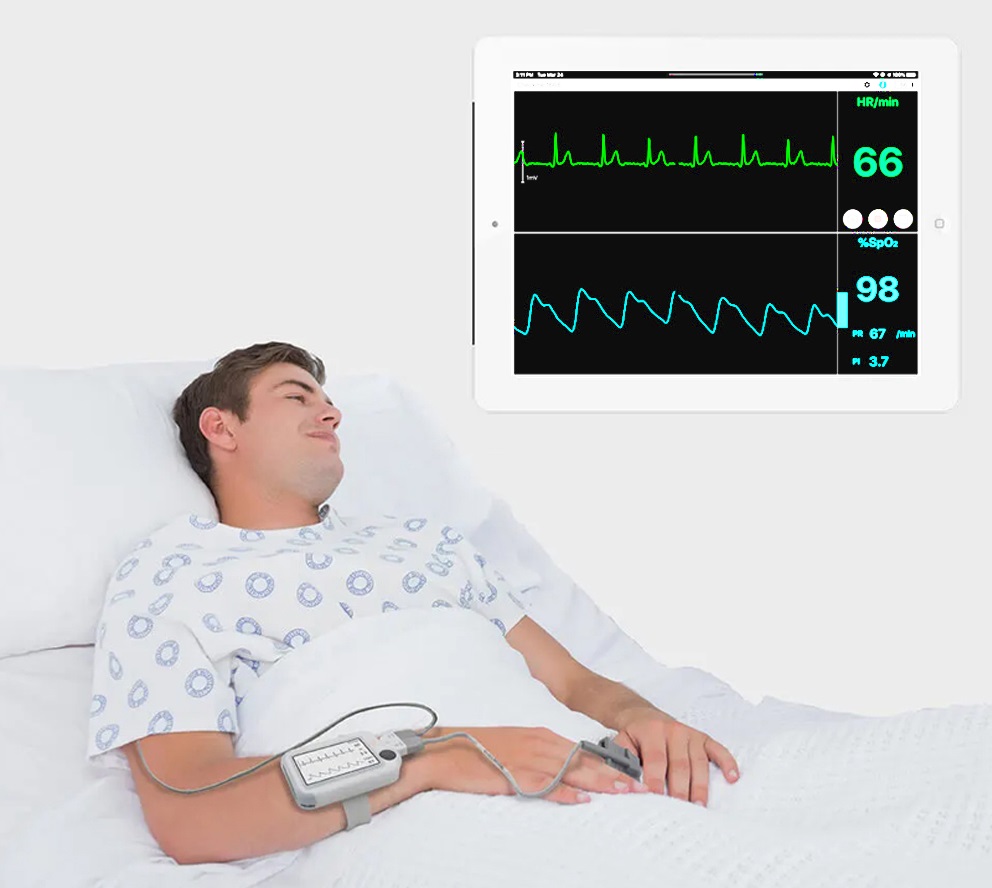
Monitoring vital functions
Modern diagnostic devices bring enormous benefits to both patients and medical staff. They enable accurate health monitoring, rapid diagnosis, and the implementation of appropriate treatment. They enable early disease detection, increasing the chances of effective treatment and improving patients' quality of life. Investing in these technologies is an investment in the health and safety of all of us.
More information about medical diagnostic devices for the circulatory system can be found on the individual product pages in our store:
MEDICAL DEVICES FOR CARDIOLOGICAL DIAGNOSTICS
We cordially invite you to familiarize yourself with the store's offer.
 Polski
  English (UK)
  Українська