
The heart is an incredible organ that performs an enormous amount of work every day, pumping blood and delivering oxygen to the entire body. Its work would be impossible without the precise electrical system that controls every contraction and relaxation of the heart muscle. In this article, we explore what the heart's electrical activity is, how it works, and why understanding it may be key to better understanding the health of our circulatory system.
How does cardiac electricity work?
The heart acts as a biological "current generator," and its electrical activity begins in a special location—the sinoatrial (SA) node. This natural pacemaker generates electrical impulses that propagate through the atria and ventricles of the heart, initiating rhythmic contractions.
This process can be divided into several key stages:
-
Pulse generation in the SA node
- The sinus node, located in the right atrium, sends an electrical impulse that spreads to both atria, causing them to contract and pump blood into the ventricles.
-
Conduction of the impulse through the AV node
- The impulse passes to the atrioventricular (AV) node, where a short delay occurs. This allows blood to flow freely from the atria to the ventricles.
-
Propagation of the impulse through the bundle of His and Purkinje fibers
- The impulse reaches the bundle of His and then splits into Purkinje fibers, which transmit the signal to the ventricular muscles, causing them to contract and pump blood into the arteries.
Why is the electrical activity of the heart so unique?
The electrical activity of the heart is unique because:
-
Self-sufficiency: The sinus node generates electrical impulses automatically, without the need for external stimulation. The heart acts as an autonomous system that adjusts its rhythm to the body's needs, for example, accelerating during exercise and slowing down at rest.
-
Precision: Each electrical impulse is synchronized, allowing the heart to pump blood efficiently. This ideal rhythm is the result of the cooperation of various structures in the conduction system.
-
Flexibility: The heart can adapt its activity to various conditions, such as stress, emotions or physical exertion, thanks to cooperation with the nervous system.
How do we monitor the electrical activity of the heart?
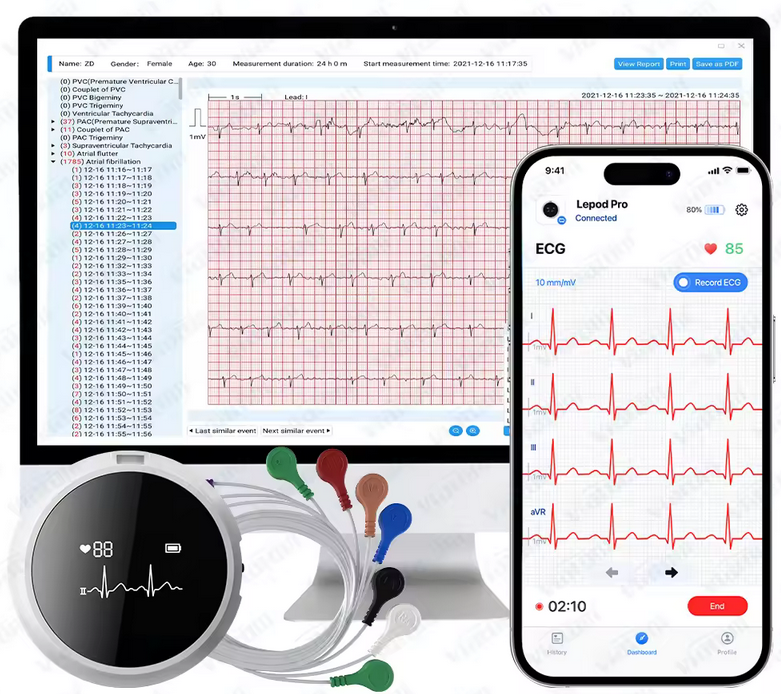
The heart's electrical activity can be measured using electrocardiography (ECG). This simple, non-invasive method allows for:
- Assessment of rhythm and impulse conduction in the heart.
- Detection of possible disorders such as arrhythmias, atrial fibrillation or atrioventricular block.
- Monitoring heart health at rest and during exercise.
The ECG is one of the most important diagnostic tools in cardiology, allowing problems to be detected at an early stage and serious complications to be prevented.
Why is it important to care for the electrical health of the heart?
Healthy electrical activity of the heart is key to well-being and longevity. Here are some tips to support the heart's electrical conduction system:
-
Healthy diet
- Eating foods rich in potassium, magnesium and omega-3 fatty acids supports the conduction of electrical impulses.
-
Physical activity
- Regular exercise strengthens the heart and helps maintain a proper rhythm.
-
Stress reduction
- Stress affects the nervous system and can disrupt heart rhythm. Relaxation techniques such as meditation and yoga can help reduce stress.
-
Avoiding stimulants
- Excess caffeine, alcohol or nicotine can lead to heart rhythm disturbances.
The heart's electrical activity is a fascinating mechanism that sustains our lives every day. Thanks to its precise conduction system, the heart can function efficiently, adapting to the body's changing needs. Understanding how this system works allows us not only to appreciate its role but also to better manage our heart health.
Remember that a healthy lifestyle, regular checkups, and body awareness are the best way to keep your heart in top shape. Let's take care of our hearts—the natural generator of life! ❤️
 Polski
  English (UK)
  Українська