
An ECG examination is a commonly performed test to assess the functioning of our heart and circulatory system.
ECG heart monitors
ECG monitoring devices work by recording the heart's electrical activity using special electrodes. The electrodes must be placed in appropriate locations on the body so that the ECG monitor can accurately record the reading.
Depending on the type of device, we distinguish different ECG monitoring devices.
These include resting ECG machines, exercise ECG machines, clinical ECG machines (used in clinics, hospitals, doctors' offices), home ECG machines (used by individual users), ECG holters (24-hour, 72-hour, 7-day) and vital signs monitors.
With such a wide range of ECG monitors to choose from, it's difficult to decide which one is right for your condition. Often, a Holter ECG is not necessary; a simple ECG machine will do the trick. However, sometimes an ECG machine isn't sufficient and a Holter ECG is necessary.
How to choose an ECG monitor for your needs?
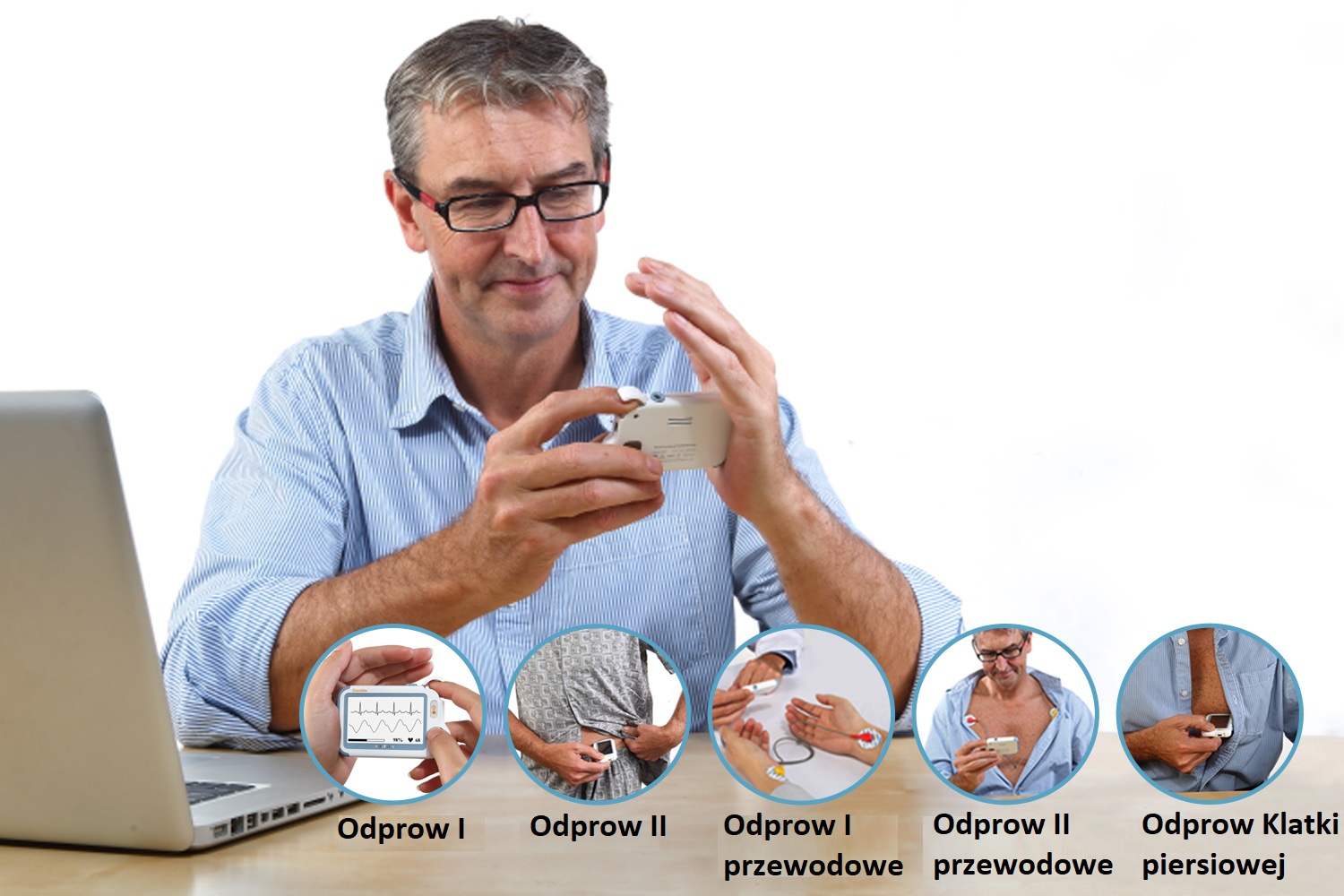
Holter ECG or ECG machine?
To make the right choice, you need to be aware of the differences between the devices mentioned above.
The simplest reliable ECG monitor is an ECG machine.
Handheld versions can be freely used at home, at work and elsewhere.
These products fit in your pocket and can be taken anywhere. Measurements are taken within seconds or minutes. They're useful when a sudden heart problem, such as palpitations, occurs. In such situations, measurements can be taken quickly and conveniently.
The device records the heart activity, saves it and analyzes it (some models of ECG devices).

ECG machines can be placed in the hands or attached to the body using appropriate chest straps and electrodes.
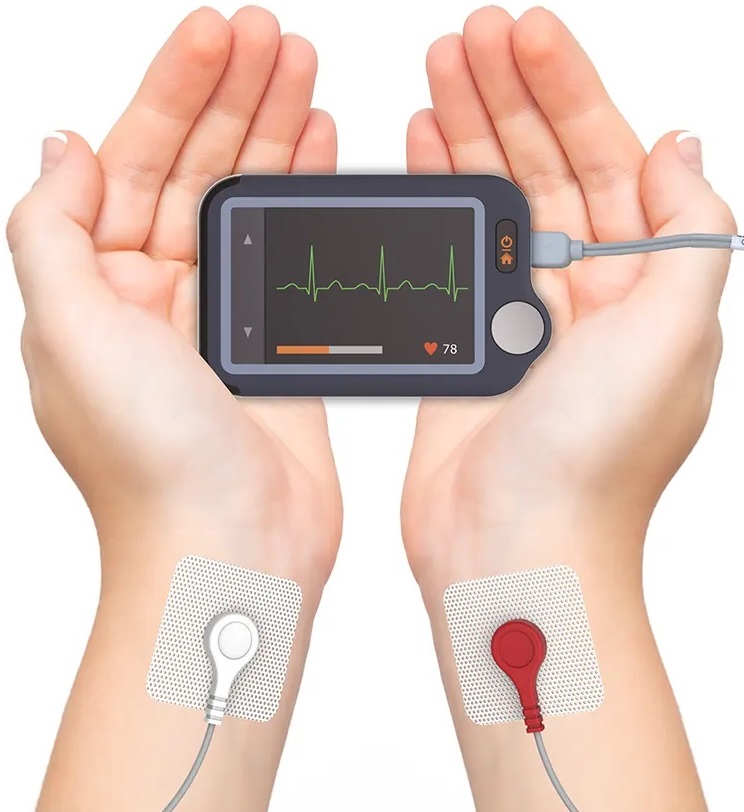
5-minute ECG machine
The choice of cameras is large.
When choosing, make sure that the camera is a medical device, had certificates and appropriate notifications. When the device is not a medical device, the measurement results may not be adequate to the actual health situation.

ECG machines differ from ECG holters in the length of measurements.
Holter ECG measures ECG for 24 hours or longer.
A Holter ECG test provides more data for analysis than a monitor. A Holter ECG test lasts at least 24 hours. Some Holters last 72 hours or even several days.
The longer the test is performed, the more precise and accurate the results can be. With a longer analysis timeframe, the doctor may notice abnormalities that would not be detected with a standard ECG.
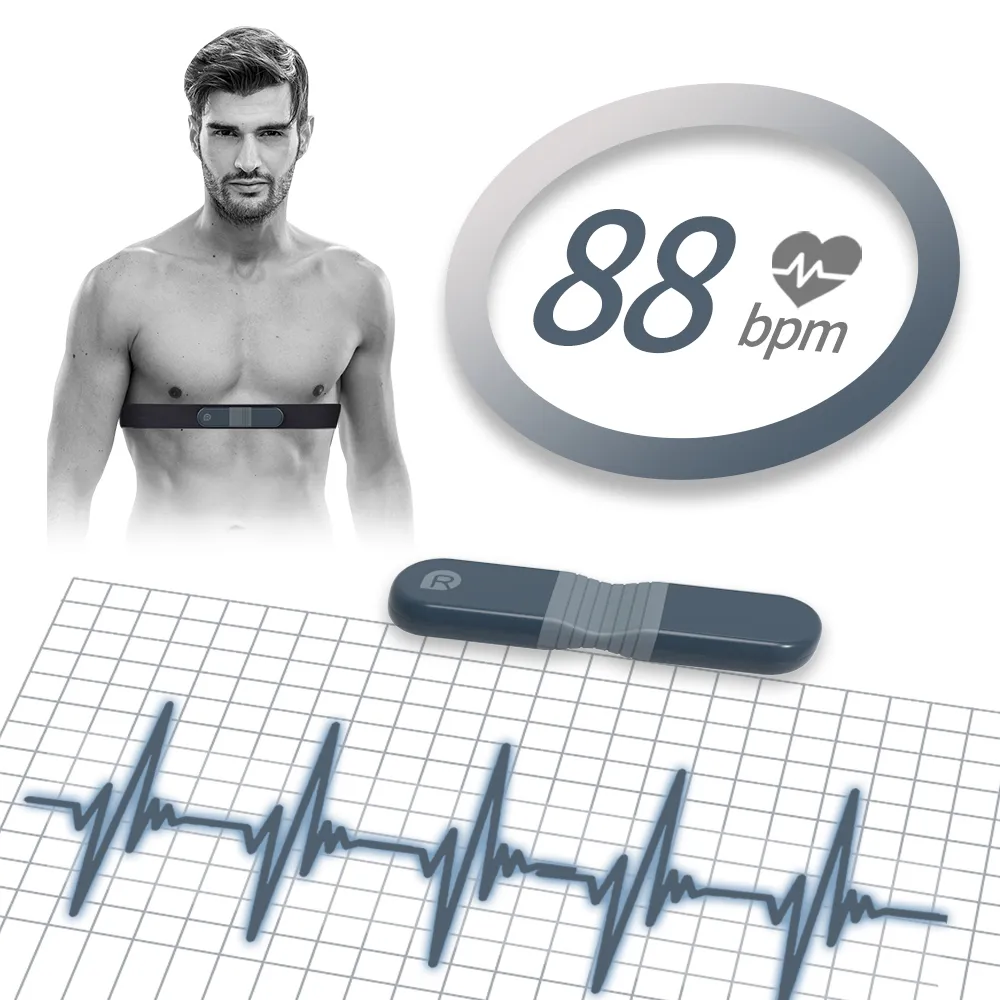
24-hour Holter ECG
You can also choose a vital signs monitor to check your heart rate.
This device combines the ability to measure multiple vital signs. It can function as an ECG machine, an ECG Holter, a pulse oximeter, a blood pressure monitor, and much more. It's an incredibly useful device.

Vital signs monitor
It is up to us which ECG monitor we choose.
It is worth remembering what functions each type of ECG performs in order to choose the right one for you.
It is necessary to verify whether the device has the necessary certificates and whether it is a medical device.
 Polski
  English (UK)
  Українська