
Preparing for the birth of a child is a special time, involving not only preparing for the baby's birth, a crib, and a stroller, but also ensuring proper health and safety. More and more expectant parents are considering a medical kit, a set of equipment and accessories that can prove extremely helpful both during pregnancy and after the birth.
Properly selected medical equipment allows for monitoring the health of mother and child, responding more quickly to alarming symptoms, and increasing a sense of security in the first months of a newborn's life. However, it's important to remember that it's not about accumulating a large number of devices, but rather choosing solutions that are truly useful and support daily care.
Why is it worth preparing a medical kit before giving birth?
The first weeks after a baby's birth can be very intense. Exhaustion, new responsibilities, and the need to monitor the newborn's health mean that any situation that raises concerns can cause additional stress.
Having basic medical equipment allows you to quickly check key health parameters, check body temperature, or monitor a child's condition during an infection. This doesn't replace a doctor's consultation, but it can help you decide whether to consult a specialist.
A medical kit is also useful for the mother herself. Pregnancy and the postpartum period are a time when a woman's body undergoes many changes, so monitoring basic health parameters can be an important part of caring for one's well-being.
Ultrasound examinations during pregnancy – the foundation of modern prenatal care
Even before the baby's layette is ready, expectant mothers often use ultrasound diagnostics. Ultrasound examinations are currently among the most important tools used during pregnancy.
Ultrasound allows for the assessment of fetal development, monitoring the pregnancy, and detecting any abnormalities at a very early stage. Several key ultrasound examinations are performed during pregnancy, including the first-trimester ultrasound, the mid-term ultrasound, and the third-trimester ultrasound.
Ultrasound examinations are among the basic tests performed during pregnancy. The Polish Society of Gynecologists and Obstetricians recommends several key ultrasound examinations at various stages of pregnancy, which allow for the assessment of fetal development, organ structure, and the course of pregnancy.
Advances in technology have allowed modern ultrasound machines to offer exceptionally high-quality imaging, allowing doctors to more accurately assess a child's health. Ultrasound devices are also becoming increasingly popular. portable ultrasound machines, which increase the availability of diagnostics and enable testing in various clinical conditions.
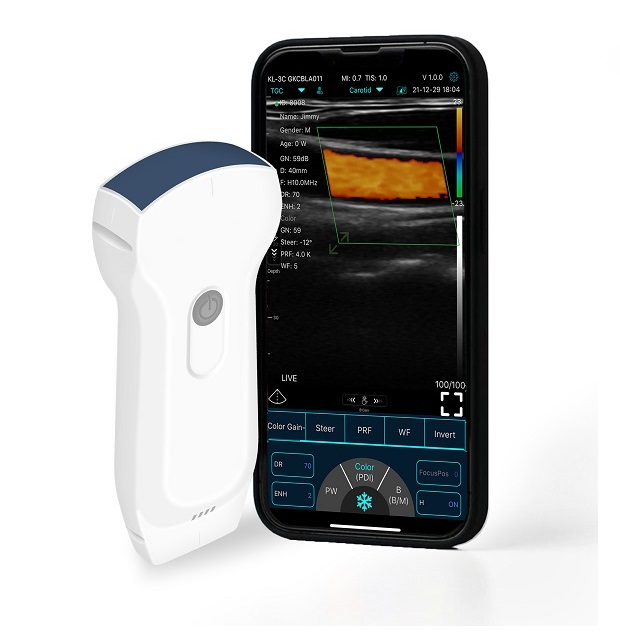
mobile ultrasound machine
Ultrasonography allows monitoring of fetal growth, assessment of the amount of amniotic fluid, location of the placenta and many other parameters important for the proper course of pregnancy.
Electronic thermometer – basic equipment for every home
An electronic thermometer remains one of the most important elements of a medical kit. Fever is one of the most common symptoms of infection in both children and adults.
Modern thermometers allow for quick and accurate body temperature measurement. Contactless models are particularly popular, as they allow for measurement without waking the child.
Regular temperature checks can be helpful during infections, after vaccinations, and in situations where parents observe disturbing changes in their child's behavior.
Inhaler – support during respiratory infections
Respiratory infections are among the most common health problems in children. Runny noses, coughs, and respiratory irritation can cause significant discomfort and impede proper breathing.
Therefore, many specialists recommend equipping your home medicine cabinet with an inhaler or nebulizer. These devices allow for the administration of inhaled medications and the inhalation of saline, which helps moisturize the mucous membranes.
Inhalers are used not only to treat infections, but also to treat allergies, asthma and other respiratory diseases.
Upper respiratory tract infections are among the most common reasons for pediatric visits in the first few years of a child's life. Saline inhalation is often used to help moisturize the respiratory tract and improve breathing comfort.
Pulse oximeter – monitoring saturation and heart rate
Pulse oximeter is a device that allows for quick measurement of blood oxygenation levels and heart rate. Although a few years ago it was associated primarily with hospitals and emergency medical services, it is now increasingly found in home medicine cabinets.

Pulse oximeter for infants, newborns, children YK-820A
The device can be particularly useful during infections associated with shortness of breath or respiratory problems. Monitoring oxygen saturation allows parents to gain additional information about their child's health.
Blood oxygen saturation in healthy individuals typically ranges from 95 to 1001 TP3T. Lower values may indicate respiratory or circulatory problems and should be interpreted by a physician in conjunction with the patient's clinical symptoms.
It is worth remembering that the measurement result should always be interpreted in the context of clinical symptoms and doctor's recommendations.
Blood pressure monitor – not only for seniors
Although blood pressure monitors are most often associated with older adults, they can also be useful for pregnant women. Regular blood pressure monitoring is especially important during the second half of pregnancy, when the risk of gestational hypertension increases.
Early detection of abnormalities allows for faster implementation of appropriate treatment and reduces the risk of complications for both mother and baby.
Modern automatic blood pressure monitors allow you to take measurements at home and are very easy to use.
Hypertension is one of the most common health problems during pregnancy. According to the Polish Society of Gynecologists and Obstetricians, hypertension-related disorders may affect up to 10% of pregnancies. Regular blood pressure monitoring allows for early detection of abnormalities and reduces the risk of complications for both mother and child.
Fetal heart rate monitor – an added sense of security
Many expectant mothers also choose to purchase a fetal heart rate monitor. This device allows them to hear the baby's heartbeat relatively early in pregnancy.
Although the detector does not replace check-ups or tests performed by a doctor, for many women it is an additional source of peace of mind and allows them to better experience the period of waiting for the birth of their baby.
However, please remember that any doubts regarding the course of pregnancy should always be consulted with a specialist.
How to prepare a home first aid kit for a newborn?
When assembling a medical kit, it's worth focusing on the devices and accessories you might actually need. Too many items often result in unnecessary expenses and complicate organization.
In most cases, a basic medical kit includes:
-
electronic thermometer,
-
inhaler or nebulizer,
-
pulse oximeter,
-
pressure gauge,
-
nasal aspirator,
-
newborn care products,
-
basic dressing materials.
This set allows you to prepare for the most common health situations and increases parents' sense of security.
Summary
A medical kit for the expectant mother and newborn doesn't have to be extensive, but it's worth ensuring the presence of devices that can support health monitoring and facilitate daily care for the baby. A thermometer, inhaler, pulse oximeter, or blood pressure monitor are among the solutions that often prove helpful in the first months of a baby's life.
The role of prenatal diagnosis should also not be overlooked. Ultrasound examinations performed during pregnancy remain one of the most important elements in monitoring a child's proper development and allow expectant parents to prepare for this new stage of life with greater peace of mind.
It's important to remember that no medical device used at home replaces a doctor's consultation or professional diagnostics. Their role is to support health monitoring, enable a quicker response to disturbing symptoms, and increase the safety of mother and baby between checkups.
A well-thought-out medical kit is an investment not only in comfort, but above all in the safety of mother and child.
Sources:
1. Polish Society of Gynecologists and Obstetricians (PTGiP) – Recommendations for the care of pregnant women.
2. National Health Fund – Calendar of examinations during pregnancy.
3. World Health Organization (WHO) – Recommendations on Antenatal Care for a Positive Pregnancy Experience.
4. Polish Neonatal Society – Recommendations for the care of newborns.
5. Polish Cardiac Society – Prevention and monitoring of cardiovascular diseases.
6. Practical Medicine – A compendium of knowledge for patients and medical staff.
 Polski
  English (UK)
  Українська