
A child's health is a priority for every parent. Especially in the case of infants who are unable to express their well-being, monitoring vital signs can be extremely helpful. One tool that supports the care of the youngest is a pulse oximeter – a device that measures blood oxygenation levels (SpO₂) and heart rate.
What is a baby pulse oximeter?
A pulse oximeter is a medical device that non-invasively measures blood oxygen saturation and heart rate. Models designed for infants differ from adult versions – they are smaller, more delicate, and equipped with specially designed probes that do not irritate the baby's skin. These devices are designed for the most sensitive patients, such as premature infants, children with respiratory conditions, or heart defects.
How does a pulse oximeter work?
A pulse oximeter uses spectrophotometric technology. LEDs produce light that penetrates the skin and tissues. The differences in light absorption between oxygenated and deoxygenated hemoglobin are then measured. Based on this data, the device calculates the percentage of oxygen saturation in the blood (SpO₂) and records the heart rate.
When should you use a pulse oximeter for babies?
1. Children with respiratory problems
Babies with respiratory infections such as pneumonia or bronchitis may need regular monitoring of their oxygen levels.
2. Premature babies
Premature babies often have an immature respiratory system, which increases the risk of decreased oxygen saturation. A pulse oximeter allows for the rapid detection of abnormalities and the implementation of appropriate measures.
3. Children with heart defects
Infants with congenital heart defects may have unstable blood oxygenation levels. Regular monitoring can prevent serious complications.
4. Sleep monitoring
Some devices, such as smart pulse oximeters in the form of socks, allow you to monitor your baby at night. This is particularly useful in preventing sleep apnea.
How to choose the right pulse oximeter?
When choosing a pulse oximeter for an infant, it is worth paying attention to several key aspects:
- Delicacy and ergonomics – probes should be made of soft materials, adapted to the child’s small hands or feet.
- Measurement accuracy – choose a model recommended by specialists and with quality certificates.
- Additional functions – e.g. alarms in case of low saturation or too high heart rate, possibility of connection with a mobile application.
- Ease of use – intuitive operation is key in situations requiring a quick response.
Popular Pulse Oximeter Models for Babies
1. Pulse Oximeter PO5 (Baby o2) Sleep Monitor for Babies and Children
A pulse oximeter with a neonatal wristband, most commonly used at home. This intelligent pulse oximeter offers continuous monitoring capabilities. It also features alarms and mobile app integration.
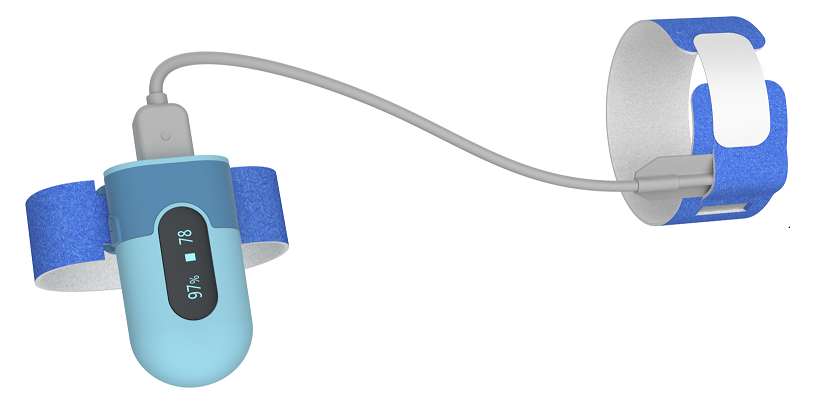
Pulse Oximeter PO5 Sleep Monitor for Babies and Children
2. Pulse oximeter for infants SP-20
A professional pulse oximeter designed for infants, children, and adults, depending on the sensor used. It's ideal for both hospital and home use. It features a clear color screen and alarms. It also comes with a docking and charging station.

Pulse oximeter for infants SP-20
Does a pulse oximeter replace a visit to the doctor?
While a pulse oximeter is a useful tool, it doesn't replace visits to a specialist. While measurement results can be an indicator of when to consult a doctor, data interpretation and diagnosis should always be performed by a professional.
A pulse oximeter for infants is an extremely valuable device that can help parents monitor their children's health. Regular SpO₂ and heart rate measurements allow for the early detection of health problems and timely response. Choosing the right model depends on the child's needs and parental preferences, but the quality, precision, and safety of the device are key.
If you're considering purchasing a pulse oximeter for your baby, it's worth consulting with a pediatrician who can help you choose the best solution. For your child's health, investing in this device can bring peace of mind and increase your little one's safety.
 Polski
  English (UK)
  Українська